
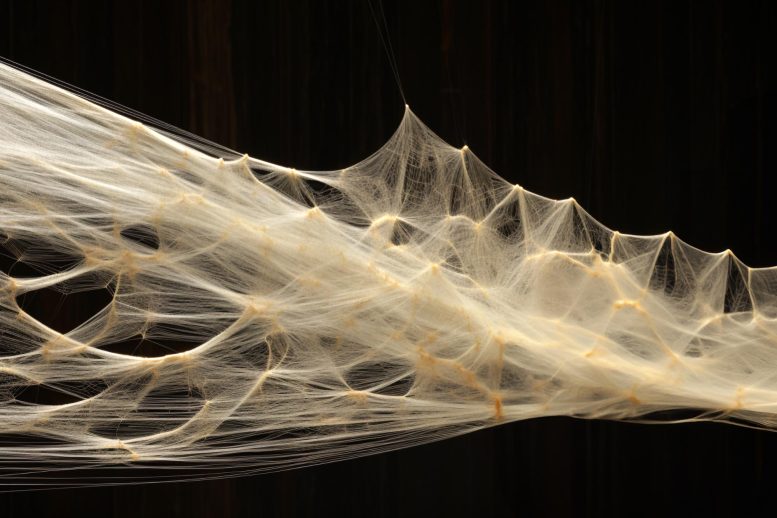
Scientists in China have developed a method to produce spider silk from genetically modified silkworms, offering a strong, sustainable alternative to synthetic fibers with applications in various industries.
Researchers have synthesized spider silk from genetically modified silkworms, producing fibers six times tougher than the Kevlar used in bulletproof vests. The study, published on September 20 in the journal Matter, is the first to successfully produce full-length spider silk proteins using silkworms. The findings demonstrate a technique that could be used to manufacture an environmentally friendly alternative to synthetic commercial fibers such as nylon.
“Silkworm silk is presently the only animal silk fiber commercialized on a large scale, with well-established rearing techniques,” said Mi. “Consequently, employing genetically modified silkworms to produce spider silk fiber enables low-cost, large-scale commercialization.”
The Sustainability of Spider Silk
Scientists have eyed spider silk as an enticingly sustainable alternative to synthetic fibers, which can release harmful microplastics into the environment and are often produced from fossil fuels that generate greenhouse gas emissions. But turning to nature for alternatives isn’t without challenges. Previously developed processes for spinning artificial spider silk have struggled to apply a surface layer of glycoproteins and lipids to the silk to help it withstand humidity and exposure to sunlight—an anti-aging “skin layer” that spiders apply to their webs.
Genetically modified silkworms offer a solution to this problem, says Mi, since silkworms coat their own fibers with a similar protective layer.
“Spider silk stands as a strategic resource in urgent need of exploration,” said Junpeng Mi, a PhD candidate at the College of Biological Science and Medical Engineering at Donghua University and the first author of the study. “The exceptionally high mechanical performance of the fibers produced in this study holds significant promise in this field. This type of fiber can be utilized as surgical sutures, addressing a global demand exceeding 300 million procedures annually.”
The spider silk fibers could also be used to create more comfortable garments and innovative types of bulletproof vests, says Mi, and they may have applications in smart materials, the military, aerospace technology, and biomedical engineering.
Synthesizing Process and Challenges
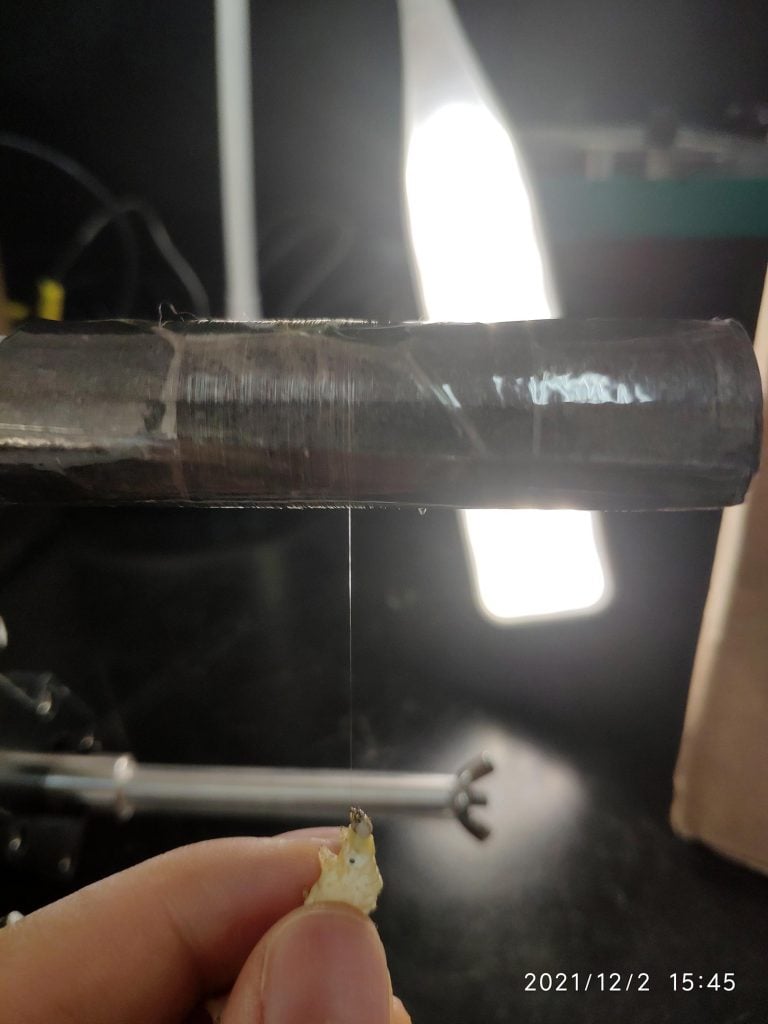
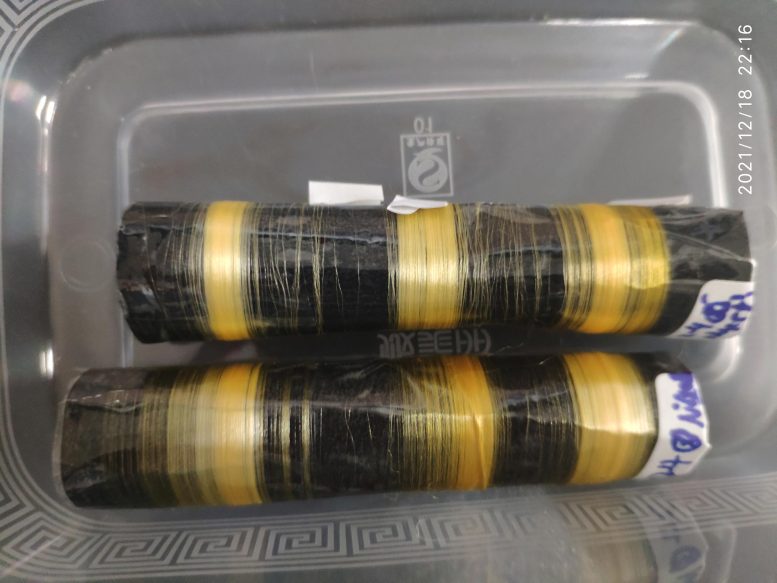
To spin spider silk from silkworms, Mi and his team introduced spider silk protein genes into the DNA of silkworms so that it would be expressed in their glands using a combination of CRISPR-Cas9 gene editing technology and hundreds of thousands of microinjections into fertilized silkworm eggs. The microinjections posed “one of the most significant challenges” in the study, said Mi, but when he saw the silkworms’ eyes glowing red under the fluorescence microscope—a sign that the gene editing had been successful—he was overjoyed.
“I danced and practically ran to Professor Meng Qing’s office to share this result,” said Mi. “I remember that night vividly, as the excitement kept me awake.”
The researchers also needed to perform “localization” modifications on the transgenic spider silk proteins so that they would interact properly with proteins in the silkworm glands, ensuring that the fiber would be spun properly. To guide the modifications, the team developed a “minimal basic structure model” of silkworm silk.
“This concept of ‘localization,’ introduced in this thesis, along with the proposed minimal structural model, represents a significant departure from previous research,” says Mi. “We are confident that large-scale commercialization is on the horizon.”
Future Prospects
In the future, Mi plans to use insights into the toughness and strength of spider silk fibers developed in the current study to develop genetically modified silkworms that produce spider silk fibers from both natural and engineered amino acids.
“The introduction of over one hundred engineered amino acids holds boundless potential for engineered spider silk fibers,” says Mi.
Reference: “High-strength and ultra-tough whole spider silk fibers spun from transgenic silkworms” by Junpeng Mi, Yizhong Zhou, Sanyuan Ma, Xingping Zhou, Shouying Xu, Yuchen Yang, Yuan Sun, Qingyou Xia, Hongnian Zhu, Suyang Wang, Luyang Tian and Qing Meng, 20 September 2023, Matter.
DOI: 10.1016/j.matt.2023.08.013
This work was supported by the National Natural Science Foundation of China, Key Projects of Science and Technology Commission of Shanghai Municipality, the International Cooperation Projects of Science and Technology Commission of Shanghai Municipality, and Fundamental Research Funds for the Central Universities.
Never miss a breakthrough: Join the SciTechDaily newsletter.
Follow us on Google and Google News.
4 Comments
Hm.
From 2010 …
https://www.wired.com/2010/10/silkworm-spider-silk/
I’m with anonymous, this is REALLY OLD NEWS.
https://news.nd.edu/news/notre-dame-and-university-of-wyoming-scientists-genetically-engineer-silkworms-to-produce-artificial-spider-silk/
9/29/2010.
It was re-reported in 2012, 2017, 2018 and 2019. That’s just a quick search. Why does this keep popping up?
Yeah this isn’t new at all. I remember seeing this on discovery chan in 2000s. Maybe it’s new in China.
It’s still not “spider” silk.